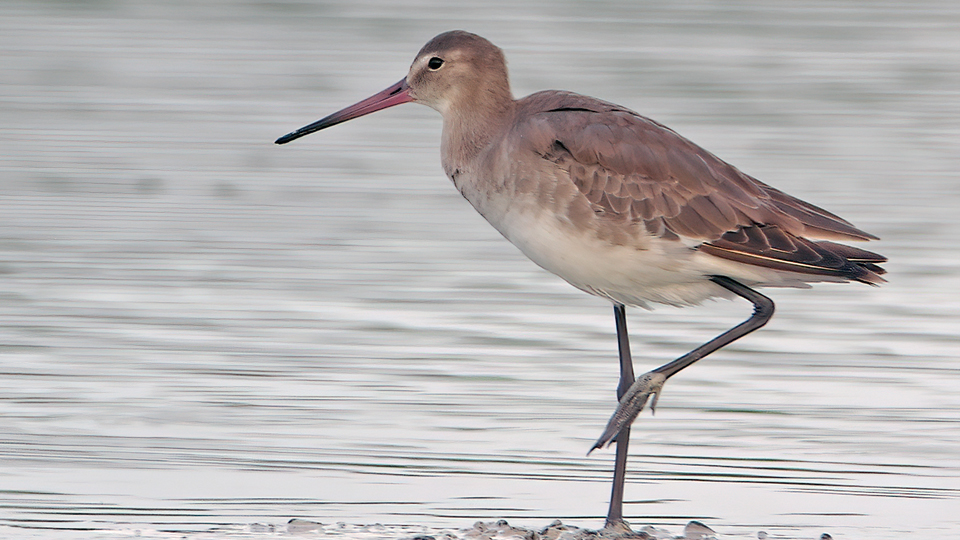
Bar-tailed Godwit
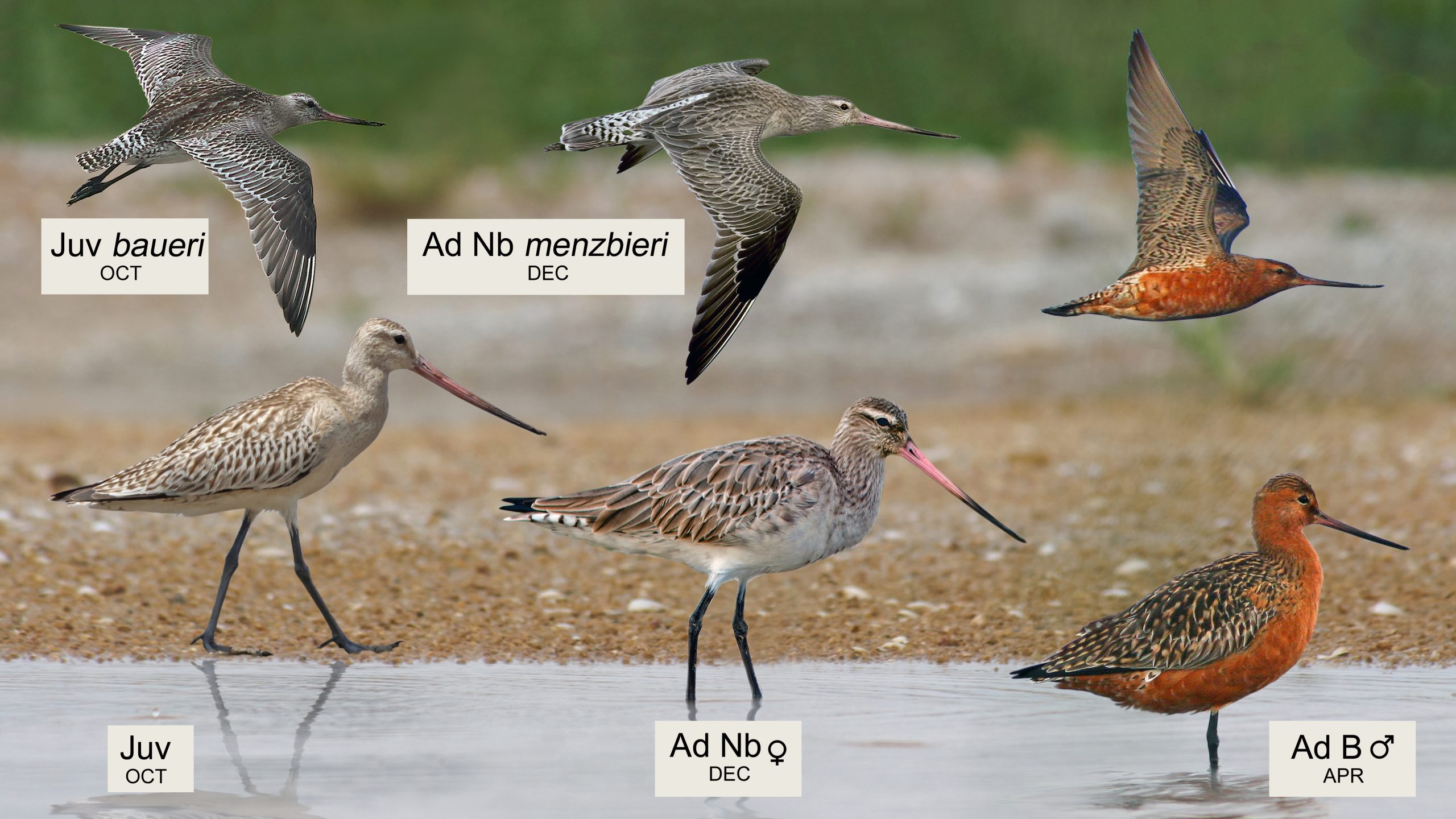
© Credits: Dave Bakewell
SCIENTIFIC NAME
Limosa lapponica
MALAY NAME
Kedidi-Raja Ekor Belang
CONSERVATION STATUS
NT
Status
Race menzbieri is a migrant and winter visitor. Small numbers of immature birds oversummer at some sites. Races baueri and anadyrensis are unrecorded but could occur.
Identification
Large, streak-backed shorebird with very long, pink-based, slightly upturned bill and relatively short black legs. In flight, barred white rump and back (menzbieri) and no wingbar from above; underwing well streaked. Toes just project beyond tail. Ad B: (Mar-Sep) Crown, lores and upperparts, streaked dark brown. Whole of underparts rich chestnut, variable brown shaft streaking on vent. Scapulars have variable amounts of chestnut, and tertials have buff or chestnut notches. Males are more richly coloured than females, are smaller and have shorter, sharper-tipped bills. Ad Nb: (Aug – Feb) Crown, ear coverts, nape and throat to breast streaked grey-brown. Well-marked buffish supercilium prominent both in front of and behind eye. Streaked grey-brown above; belly, vent and flanks pale buff – whitish, with variable barring on flanks and vent. Juv: Similar to Ad Nb but wing coverts, tertials, scapulars have dark brown centres with neat buff edges or triangular notches. Mantle and scapulars look darker than coverts. Race baueri (unrecorded) differs from menzbieri by larger size and densely barred rump and (especially) back. Anadyrensis is probably not separable in the field from menzbieri.
Similar Species
Shorter legged and significantly larger than both Black-tailed Godwit and Asian Dowitcher. Streaked upperparts distinguish it from Black-tailed Godwit, as does more tapered, upturned bill and supercilium prominence behind eye . Barred tail is usually obscured beneath black wingtips when on the ground, so identification using tail colour can be a trap for the unwary. Pink-based and slightly upturned bill distinguishes it from Asian Dowitcher (though beware birds with mud-coated bills!). When roosting, could be confused with Whimbrel, but note paler overall colour and less contrasting head pattern. In flight, note short legs and very different upperwing and underwing patterns.
Typical behaviour
Forages on mud/sand substrates by probing deep beneath the surface, feeding mainly on polychaete worms and bivalves. Preferred roost sites include sandbars and open areas on the coast, but will perch in mangrove trees if preferred sites are not available. Some birds pair up on northward migration.
Vocalizations
Call is a yelp, uttered singly or as a double note. Easily overlooked amidst the noise of a large, multi-species flock. https://xeno-canto.org/464603.
Range
Most numerous along the mudflats of the west coast of Peninsular Malaysia, particularly at favoured sites in Pulau Pinang, Perak and Selangor. Smaller numbers on the east coast of Johor and Pahang. In Bornean Malaysia, numerous only in western Sarawak, but occurs in small numbers along the entire coast.
Seasonality
Most frequently seen end of August – mid-April.