
Black-tailed Godwit
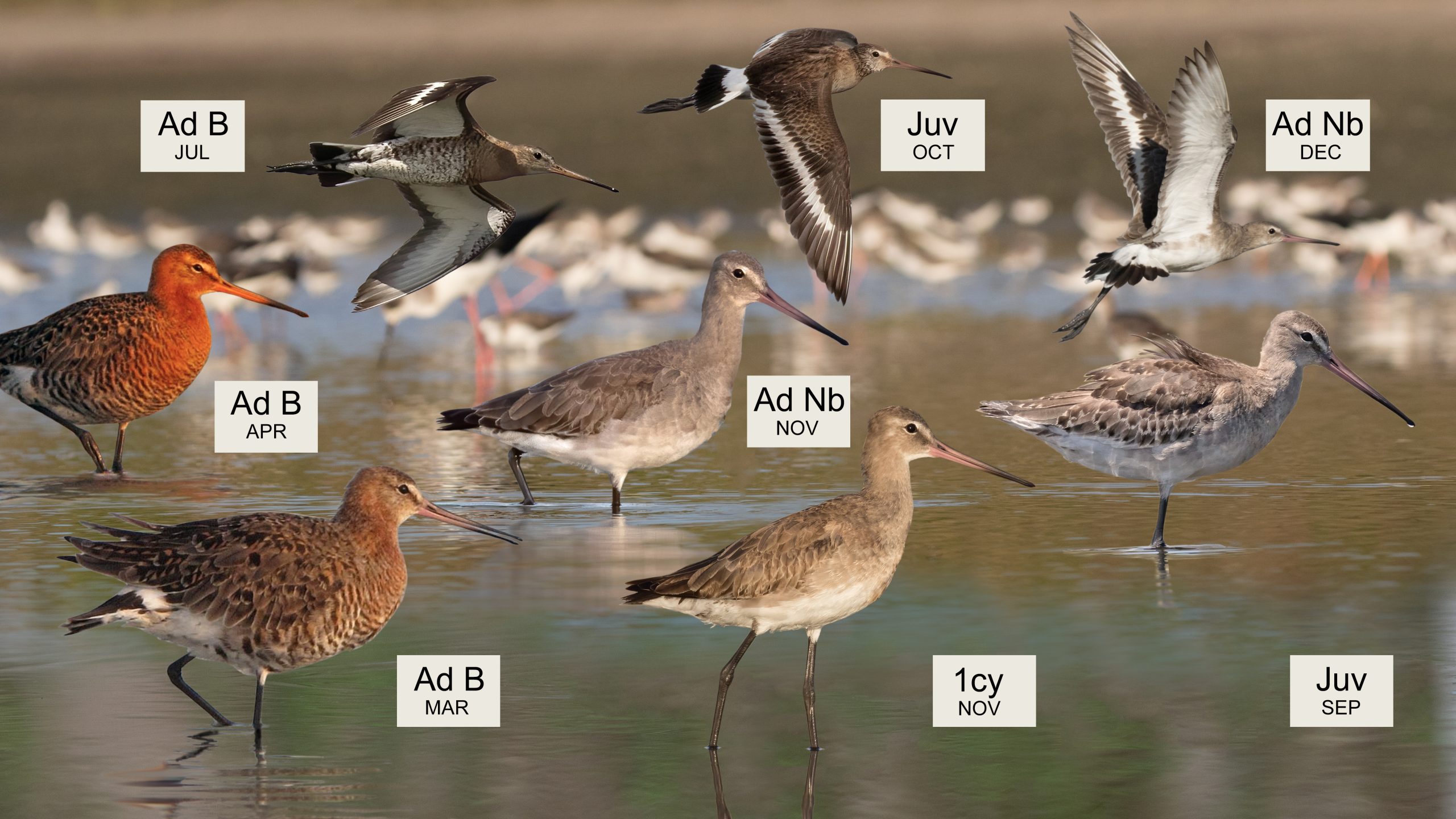
© Credits: Dave Bakewell
SCIENTIFIC NAME
Limosa limosa
MALAY NAME
Kedidi-Raja Ekor Hitam
CONSERVATION STATUS
NT
Status
Race melanuroides is a relatively common migrant and non-breeding visitor to intertidal areas, in smaller numbers than Bar-tailed. Larger individuals seen occasionally are thought to be the recently described bohaii race.
Identification
Medium-sized, neat, long-legged godwit with long, straight, blob-tipped, pink-based bill. Distinctive in flight, with mostly black tail, white rump and broad white midwing bar above; clear white underwing coverts bordered by blackish leading and trailing edges of wing below; entire feet extending beyond the tail. Ad B: (Mar – Aug) Brown crown and ear coverts; whitish supercilium, which tends to be brighter in front of eye; nape, throat and breast rich chestnut; lower breast, flanks, belly and vent white with thick, black, transverse bars. Coverts and tertials mostly plain brown; scapulars and mantle black-centred with orange or chestnut edges. Males are brighter and smaller than females. Ad Nb: (Sep – Feb) Plain, unstreaked, grey-brown head, neck, breast and upperparts; white supercilium in front of eye; throat, belly and vent white. Often has ill-defined vertical brown stripe down central breast. Juv: (Aug – Oct) As Ad Nb, but coverts have blackish subterminal anchors and buff edges when fresh; tertials are lightly notched along outer edge, and scapulars and mantle are blackish (soon replaced by adultlike grey formative plumage feathers).
Similar Species
Small size (melanuroides is barely larger than Common Greenshank), long legs and straight bill separate this species from larger Bar-tailed Godwit. Plain upperparts in Nb plumage, and in flight, distinctive wing and tail pattern, also distinguish it from Asian Dowitcher, with which it often associates.
Typical behaviour
“Sewing machine-like” feeding action (shared to some extent with Bar-tailed Godwit and dowitchers) describes repetitive deep probing into soft substrate to locate prey, mainly bivalves and polychaete worms. Flies in tight flocks to and from roosting areas, often mingling with other species.
Vocalizations
On migration, usually a single, repeated froglike note. https://xeno-canto.org/403654.
Range
Similar to that of Bar-tailed Godwit, though less numerous, preferring softer mud substrates.More likely to occur in coastal freshwater habitats, like paddyfields, than Bar-tailed. Largest numbers seen in Pulau Pinang, Perak, Selangor and western Sarawak.
Seasonality
Most frequently seen end of August – early April.


