
Common Greenshank
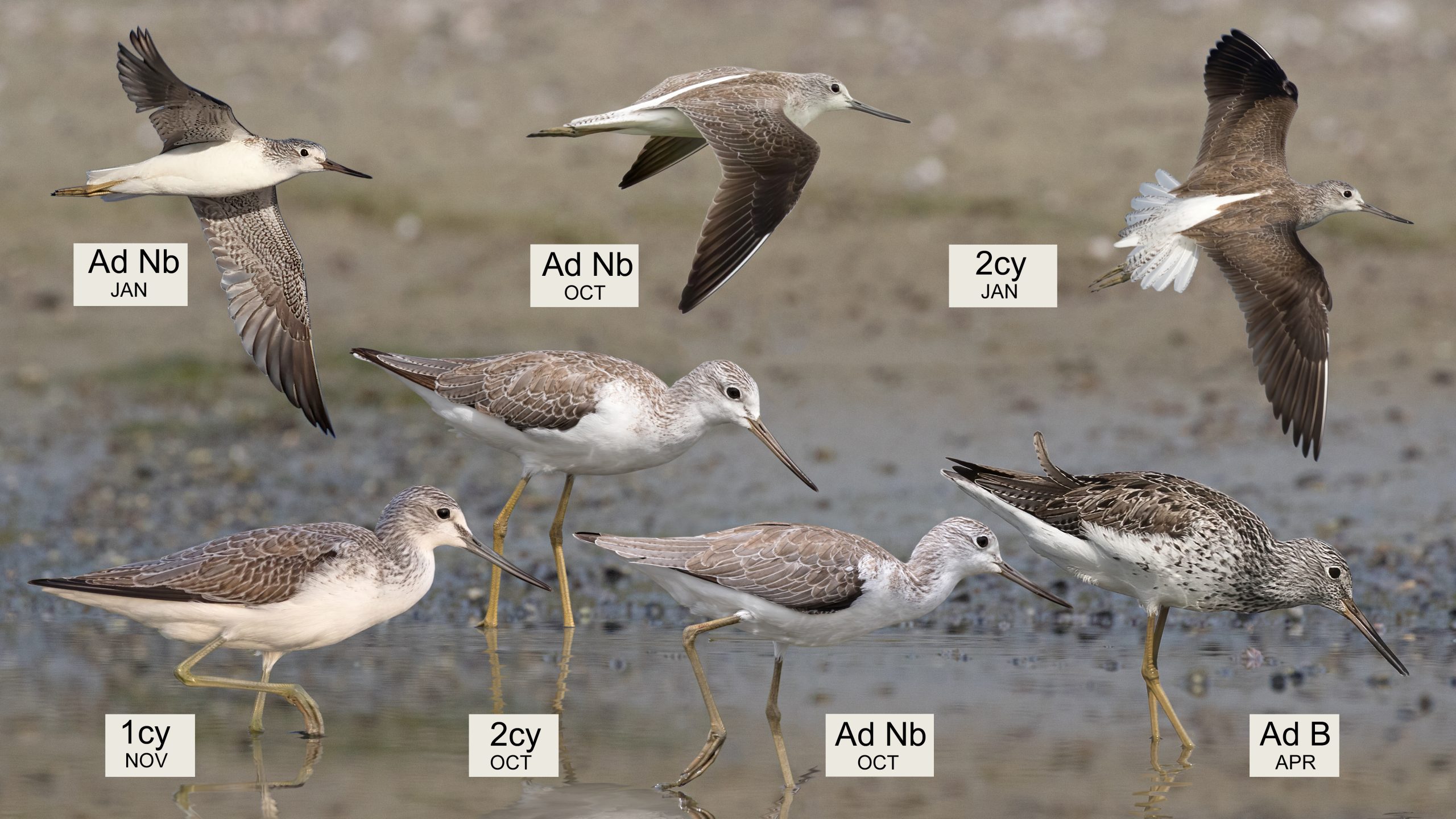
© Credits: Dave Bakewell
SCIENTIFIC NAME
Tringa nebularia
MALAY NAME
Kedidi Kaki Hijau Biasa
CONSERVATION STATUS
LC
Status
Widespread migrant and non-breeding visitor.
Identification
Elegant white and grey/brown sandpiper with medium-length, slightly upcurved bill and long green-yellow legs. In flight, toes project beyond tail. From above, plain darkish wings and scapulars contrast with white back and rump and whitish, barred tail. From below, wing coverts well-barred. Ad B: (Apr – Aug) Basal half of bill blue-grey to pinkish. Crown, ear coverts and nape white with black streaks; indistinct white supercilium in front of eye, and eyering; dark eyestripe and lores. Throat white; breast and flanks white with black streaks and bars; belly and vent white. Mantle and scapulars grey, some with black centres. Greater coverts and tertials have many fine dark ‘pencil marks’ and narrow white notches along the edges. Ad Nb: (Sep – Feb) Basal half of bill pale grey, flesh or greenish; distal half blackish. Crown, ear coverts and nape white streaked grey; forehead, eyering white; lores grey; throat, breast and rest of underparts white with some grey mottling on breast sides. Upperpart feathers light brown to grey with whitish fringes; tertials show fine ‘pencil marks’ along edges. 1cy: (Aug – Nov) Full juvenile plumage has not been documented in Malaysia. Hatch-year birds usually arrive having completed Preformative moult. Distinguished from Ad Nb by neat brown-centred, pale-edged coverts; median coverts may show darker anchors.
Similar Species
Marsh Sandpiper is smaller and more elegant, with longer legs, finer, needle-like bill and more prominent supercilium behind eye in Ad Nb and Juv plumages. Common Redshank is much browner above. Nordmann’s Greenshank has shorter, brighter legs and a squarer body-shape, as well as being paler in Ad Nb plumage and has different tertial pattern. Spotted Redshank (rare) is similar, but has red bill base and longer, bright red legs.
Typical behaviour
Has a variety of foraging techniques, depending on prey. Hunts fish fry by dashing around in shallow water, occasionally running with open bill partly submerged. At other times, picks prey from substrate surface or forages in belly-deep water, dipping head below surface. Seldom probes. Wary and vocal when flushed. Usually forages alone.
Vocalizations
Typical flight call is one of the easiest shorebird calls to learn and remember – a loud, ringing tew-tew-tew: https://xeno-canto.org/763927
Range
Occurs in both intertidal and freshwater habitats, mostly on the coastal plain but also inland in agricultural wetlands. Seldom gathers in very large flocks.
Seasonality
Most frequently seen from August to mid-May.


