
Common Sandpiper
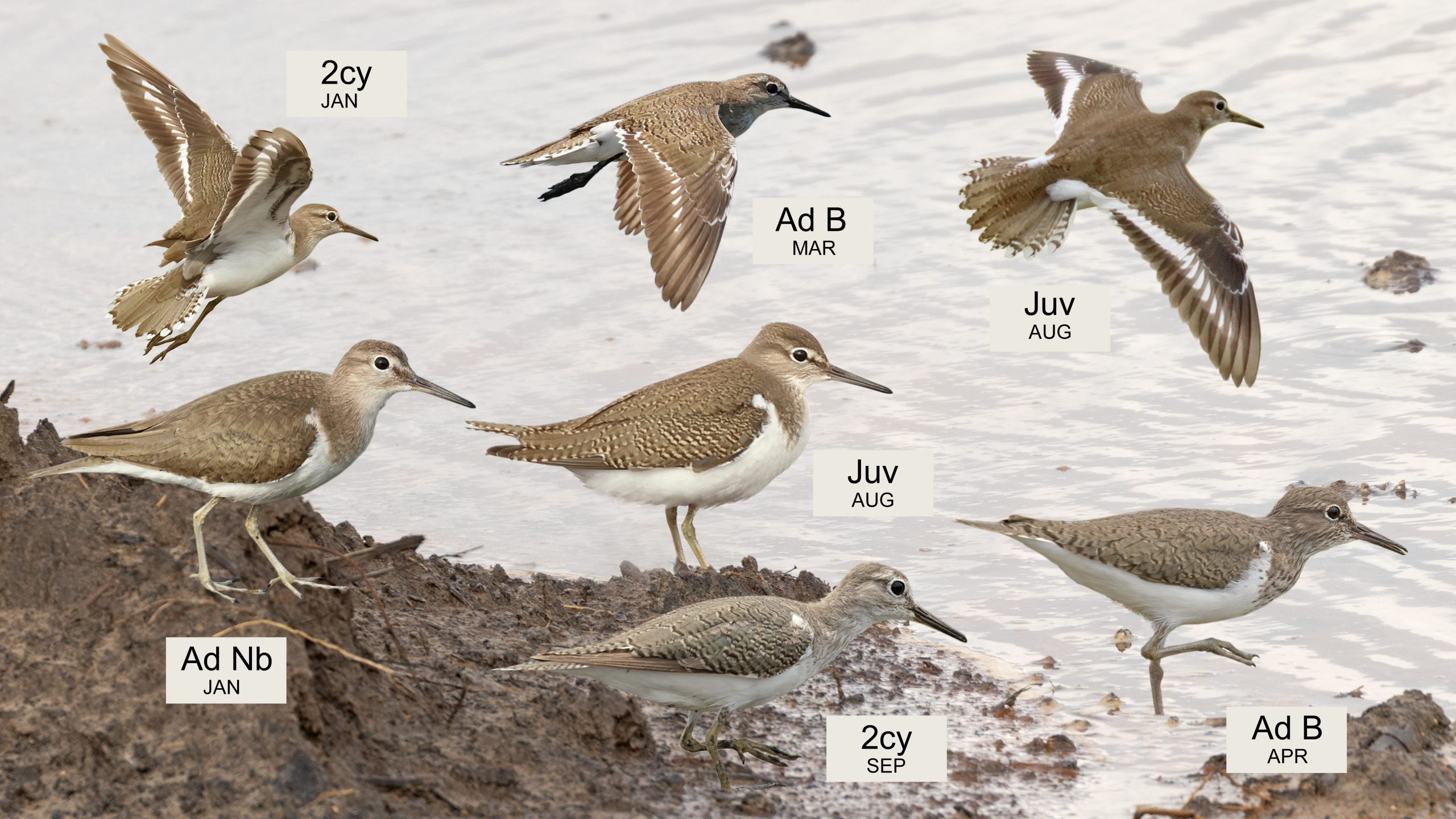
© Credits: Dave Bakewell
SCIENTIFIC NAME
Actitis hypoleucos
MALAY NAME
Kedidi-Kelicap Biasa
CONSERVATION STATUS
LC
Status
Common migrant (one of the earliest to return) and non-breeding visitor.
Identification
Short-legged, long-tailed shorebird with mid-length, straight bill. Distinctive white ‘spur’ at the wing shoulder. Near-constant bobbing of rear end and stiff-winged flight characteristic. In flight, from above, thick,white wingbar extends to inner primaries and long tail has white tips and edges. Underwing has three white bars. In all plumages, olive-green legs, white underparts from vent to lower breast, including a white ‘hook’ around the bend of the closed wing, and olive-brown upperparts. Ad B: (April – Aug) Crown, ear coverts, nape, breast sides olive, streaked blackish. Indistinctly paler throat and supercilium, darker lores and eyestripe. Upperpart feathers, including tail, barred darker. Ad Nb: (Sep – Feb) As Ad B but streaking on head and breast less prominent; upperpart feathers tipped lighter when fresh and dark subterminal bars thinner. Juv: (Aug-Sep) Differs from adults in having pale internal bars on coverts and scapulars.
Similar Species
Shares superficial structural and plumage pattern similarities with Temminck’s Stint, which is much smaller and does not bob rear end. Green and Wood Sandpipers may bob rear end when alert. Wood Sandpiper is more elegant with longer yellowish legs. Green Sandpiper has much darker upperparts and lacks white spur in front of wing bend. Terek Sandpiper and Grey-tailed Tattler are similarly long-bodied and short-legged, but have brighter yellow legs and much greyer upperparts.
Typical behaviour
Characteristic, near-continuous ‘tail-bobbing’ when foraging or alarmed. Forages singly, and behaves aggressively toward other Common Sandpipers, sometimes becoming involved in protracted chasing and aerial skirmishes. Feeds unobtrusively at water’s edge, and seeks out shady spots to roost. May be seen perching on rooftops or trees. In flight, stiff-winged, ‘shivery’ flight action diagnostic.
Vocalizations
Typical call a high-pitched, ringing, hee-dee-dee-dee. https://xeno-canto.org/151332.
Range
The most widespread shorebird species; can be encountered almost anywhere, including storm drains and roadside puddles in urban areas. Seldom occurs in flocks, and does not show strong preference for intertidal areas.
Seasonality
Most frequently seen from July to May.


