
Marsh Sandpiper
© Credits: Dave Bakewell
SCIENTIFIC NAME
Tringa stagnatilis
MALAY NAME
Kedidi Payah
CONSERVATION STATUS
LC
Status
Common and widespread migrant and non-breeding visitor, though seldom numerous.
Identification
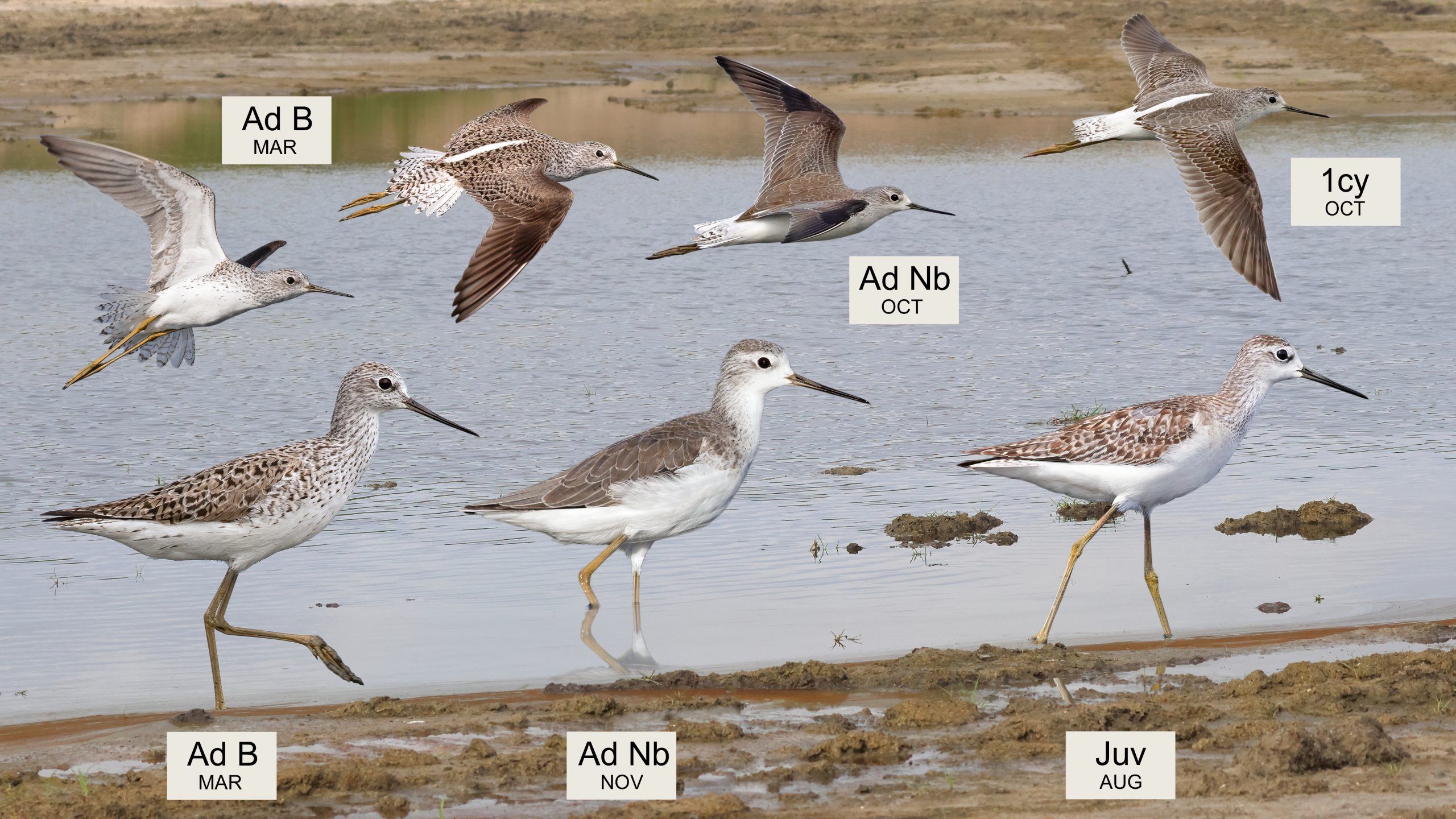
Delicate, elegant sandpiper with long yellowish legs and needle-like bill. White supercilium and darker cap evident in most plumages. In flight, entire foot projects beyond tail and underwing coverts are mostly white. Ad B: (Mar-May) Head, neck and breast white with black streaks, except for white supercilium (streaked behind the eye), eyering and throat. Underparts white, with black chevrons on flanks and streaks on vent. Above, mantle, scapulars, coverts and tertials grey with blackish centres, including complex subterminal lines and squiggles on median and greater coverts. Tertials have distinct black triangular marks centred on the feather shaft. Marginal coverts browner and plain. Ad Nb: (Oct – Feb) Crown, ear coverts, nape and breast sides streaked light grey. Forehead, lores and supercilium white, which contrasts with darker crown. Underparts below breast unmarked white. Above, mantle, scapulars, coverts and tertials grey or grey-brown, darker at shoulder of wing. Juv: (Aug – Sep) Differs from Ad Nb in having brown rather than grey-streaked head; scapulars, coverts and tertials have brown centres with whitish edges; greater coverts and tertials have notched edges. Preformative moult progressively replaces brown body feathers with grey, adult-like ones, after which, 1cy can be aged by the presence of retained juvenile coverts.
Similar Species
Common Greenshank is larger, shorter-legged and thicker billed, and has a much less contrasting head pattern (except in B plumage). Wood Sandpiper is smaller, browner above and has shorter legs. When swimming, Marsh Sandpiper could be mistaken for a phalarope, but lacks dark mask. Other sandpipers are generally stockier and shorter-legged.
Typical behaviour
Forages singly or in loose flocks; at times picking from the water surface, at others probing with head submerged. Often feeds in deeper water, and is a comfortable swimmer. At times, uses scything, avocet-like bill motion. Aggressive toward other Marsh Sandpipers and fights can be protracted and vicious.
Vocalizations
Typical flight call a single, downwardly inflected cute: https://xeno-canto.org/838758. When agitated, piping, Common Redshank-like notes: https://xeno-canto.org/763928.
Range
Occurs anywhere in the coastal plain, preferring brackish and freshwater rather than tidal wetlands, seldom in aggregations of >200 birds.
Seasonality
Most frequently seen from the end of August to May.


