
Nordmann’s Greenshank
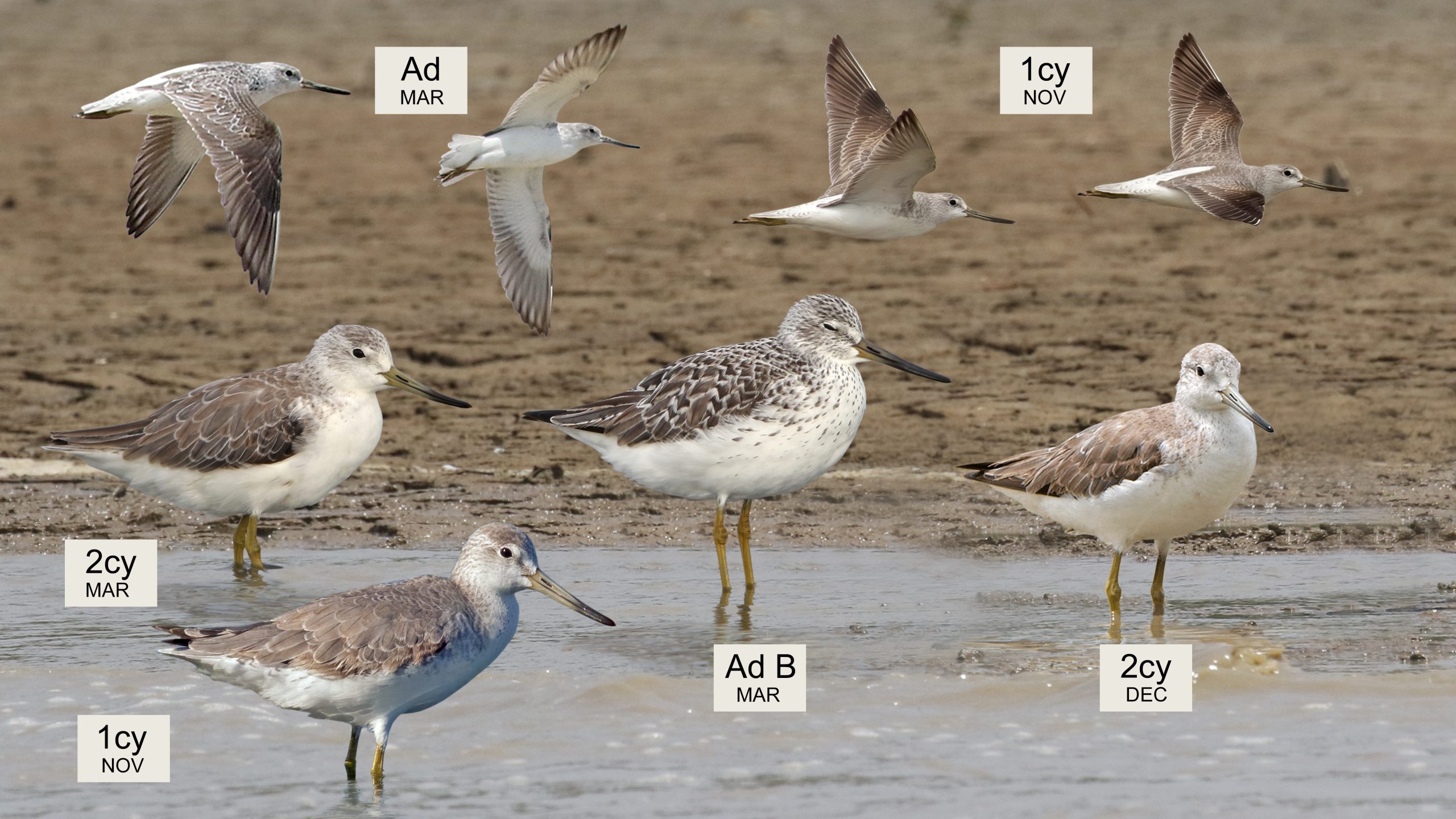
© Credits: Dave Bakewell
SCIENTIFIC NAME
Tringa guttifer
MALAY NAME
Kedidi Kaki Hijau Berbintik
CONSERVATION STATUS
EN
Status
Globally rare migrant and non-breeding visitor.
Identification
Chunky greenshank with thick, slightly upcurved bill with relatively short, yellow legs. Often appears strikingly pale. In flight, toes barely project beyond tail; tail often appears white, and underwing coverts are pure white and unbarred. Ad B: (Mar-Apr) Full B plumage is not attained before birds leave Malaysia. Birds moulting into fresh B plumage have white and dark grey streaked crown and ear coverts, nape similar but paler; supercilium white in front of and over the eye.Underparts white except for variable amount of drop-shaped black spotting on breast and flanks. Breeding mantle and scapular feathers have blackish centres and shaft streak and white edges. Breeding plumage greater coverts and tertials are blackish centred with large white triangular notches along edge. Ad Nb: (Nov – Mar) Bill strikingly bicoloured – green basal half , black distal half. Crown, ear coverts and nape pale grey; forehead and supercilium white, streaked behind eye. Underparts mostly white, with some fine grey speckling at breast sides. Upperpart feathers plain, pale grey with narrow white fringes. 1cy: (Nov – Jan) Hatch-year birds have completed Preformative moult before arrival in Malaysia, so can best be told from adults by unmoulted juvenile lower tertials and coverts, which are brownish, have notched edges and are usually rather worn.
Similar Species
Common Greenshank is larger, longer-legged and more elegant in build. ‘Pencil marks’ on tertials are diagnostic of Common, which also often appears browner on upperparts than Nordmann’s. From other similar species by combination of shape, including leg and bill, and pallid appearance.
Typical behaviour
Forages near the tide edge, often belly-deep in water, or in soft mud. Methodical walking and probing at times; at others, when hunting fish or crabs, adopts a crouched posture and runs toward prey, sometimes half-opening wings to aid balance. On a rising tide, one of the last species to leave to roost, when it often associates with Grey Plover, and spends much of the time asleep.
Vocalizations
Typical call a single loud, nasal, note, kloot: https://macaulaylibrary.org/asset/395839691.
Range
Exclusively coastal, with largest concentrations occurring on the west coast of Peninsular Malaysia, particularly in mainland Pulau Pinang, Perak and Selangor.
Seasonality
Most frequently seen from November to February.


