
Ruddy Turnstone
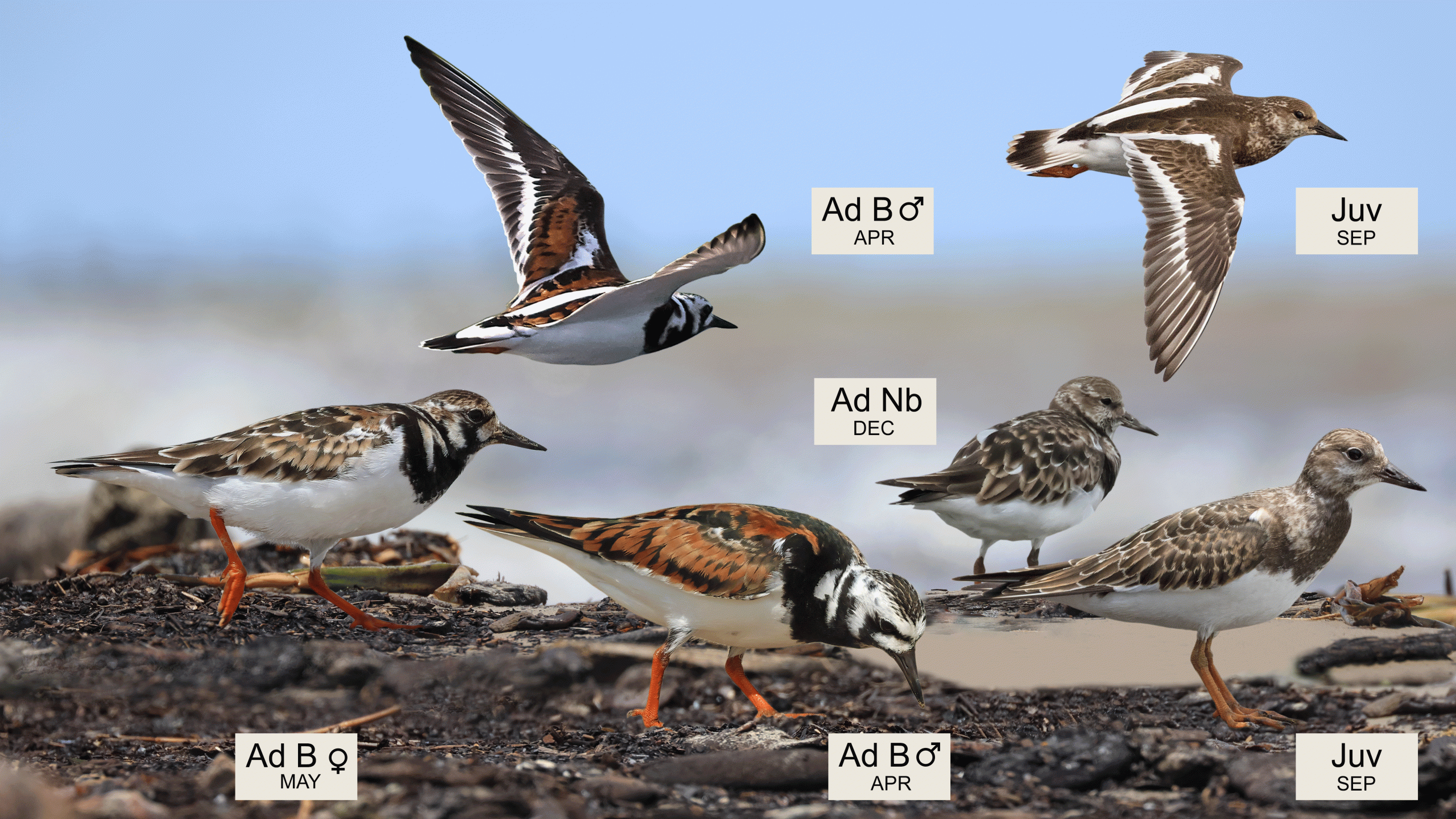
© Credits: Dave Bakewell
SCIENTIFIC NAME
Arenaria interpres
MALAY NAME
Kedidi-Kerikil Merah
CONSERVATION STATUS
LC
Status
Sporadic, regular migrant and non-breeding visitor in small numbers.
Identification
Small, stocky shorebird with dark breastband, short orange legs and unique wedge-shaped bill. In flight, bold white mid-wingbar, another white bar bordering the scapulars, white back and upper tail coverts and broad black subterminal tail band. Ad B: (Mar – Sep) Unique black and white face pattern and black, lobed breastband. Below this, clean white. Upperparts a mix of bright chestnut and black feathers. Females are duller and browner than males. Ad Nb: (Sep – Feb) Similar in pattern to Ad B, but chestnut replaced by dark brown above. Juv: (Aug – Oct) Similar to Ad Nb but wing coverts and scapulars smaller than in adult and clearly edged with buff or ochre-brown.
Similar Species
Pigeon-like shape and shuffling, busy foraging behaviour make it unlike to be confused with any other shorebird. Shares dark breastband and orange legs with Common Ringed Plover but has a very different head pattern and much shorter legs.
Typical behaviour
Constant walk and peck action, with characteristic behaviour of flipping stone, bits of wood etc with the bill to expose invertebrates hiding beneath. Often moves across substrate by walking from one piece of flotsam to the next, flipping it over and then moving on to the next one.
Vocalizations
A variety of notes, including a gravelly trill https://xeno-canto.org/403677 and single contact notes https://xeno-canto.org/546931, https://xeno-canto.org/311155
Range
Can be found almost anywhere along the coastline. Frequents both mudflats and sandier beaches, and also favours rocky tidelines.
Seasonality
Most frequently seen mid-Aug – mid-Apr.

