
Terek Sandpiper
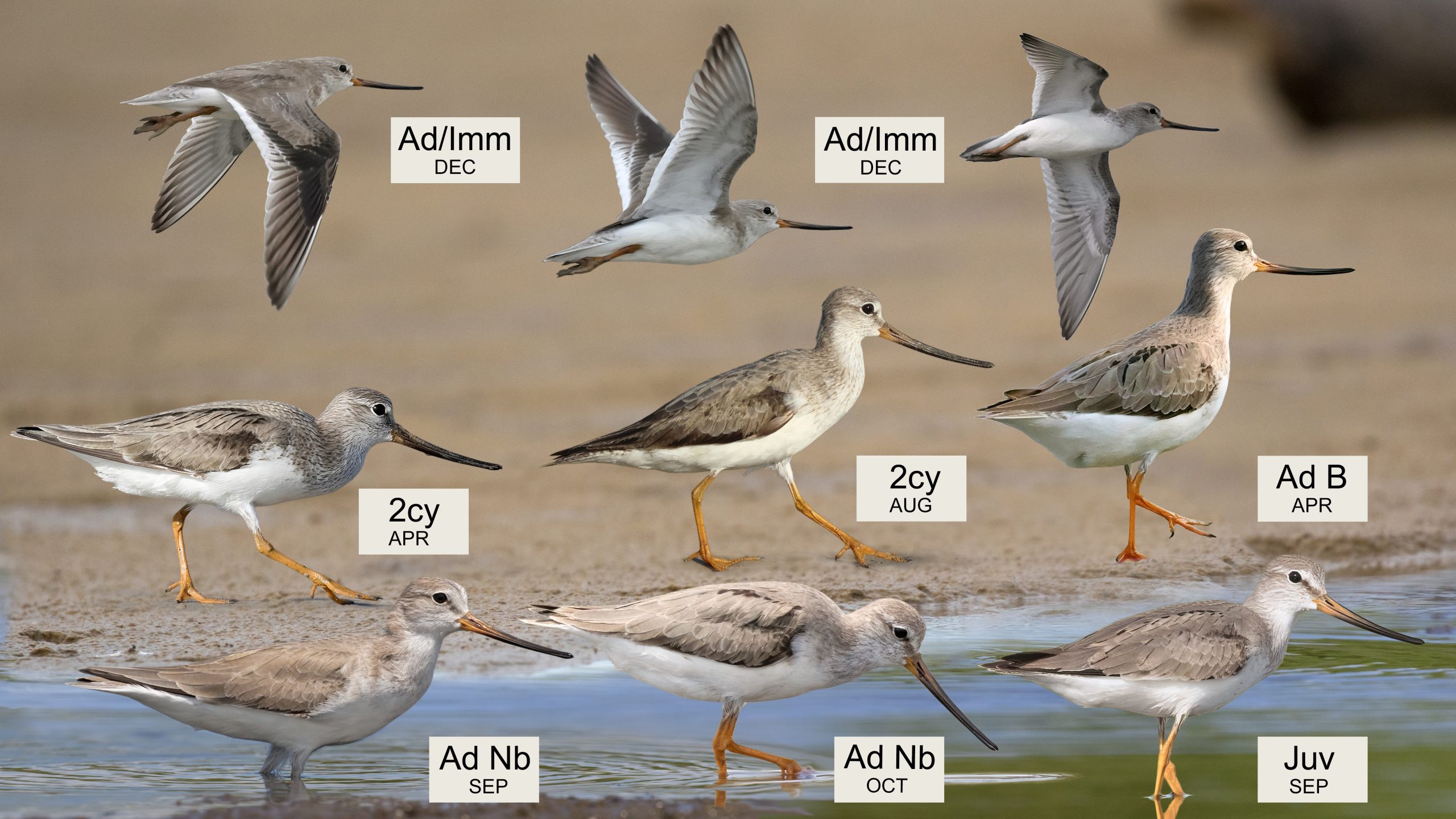
© Credits: Dave Bakewell
SCIENTIFIC NAME
Xenus cinereus
MALAY NAME
Kedidi Sereng
CONSERVATION STATUS
LC
Status
Common migrant and non-breeding visitor.
Identification
A robust, grey-and-white shorebird with long upcurved, orange-based bill and short, bright orange legs. In flight, front-heavy appearance due to long bill and lack of leg projection. From above, plain grey rump and tail; broad white trailing edge to secondaries. Underwing white with dark leading edge. Ad B: (Apr – Aug) Crown and ear coverts grey, streaked darker; forehead, supercilium, throat whitish, streaked dark grey. Breast, especially sides, grey with darker streaks; belly, flanks and vent white, with sparse dark barring on flanks and vent. Mantle, scapulars, coverts and tertials grey with blackish shaft streaks, broadest on upper scapulars, forming prominent black line. Lower scapulars and coverts may also show dark grey subterminal line and white fringe; marginal coverts dark grey, forming dark shoulder patch. AdNb: (Oct – Feb) Similar to Ad B but less streaked, plainer above, lacking dark line on upper scapulars. Juv: (Sep – Oct) Similar to Ad B but streaks confined to very fine shaft streaking on breast sides, mantle, scapulars and coverts. Averages less yellow on bill base.
Similar Species
Superficially similar to other bright-legged sandpipers, but none shares unique shape and proportions. Vocally, could be confused with Grey-tailed Tattler.
Typical behaviour
Forages both by touch and sight; probing deeply and vigorously with bill held vertically, and pursuing sighted prey in long, rapid runs. Main food is small crabs.
Vocalizations
Loud, ringing wee-wee-weep often indicates the presence of this species before they are seen. https://xeno-canto.org/695210.
Range
Common in coastal intertidal habitat, with aggregations of 500+ at favoured sites on the west coast of Peninsular Malaysia and the Sarawak coastline.
Seasonality
Most frequently seen from August to May.


