
Teluk Air Tawar-Kuala Muda (TAT-KM)
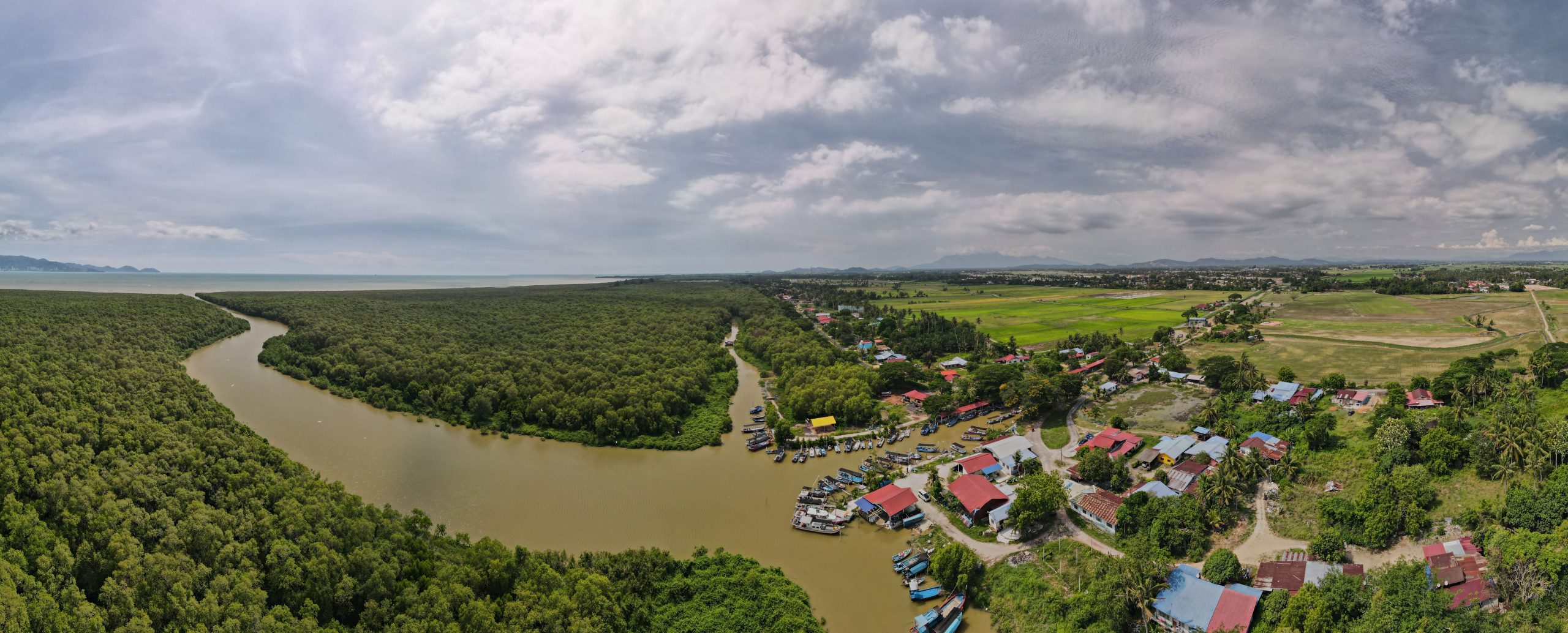
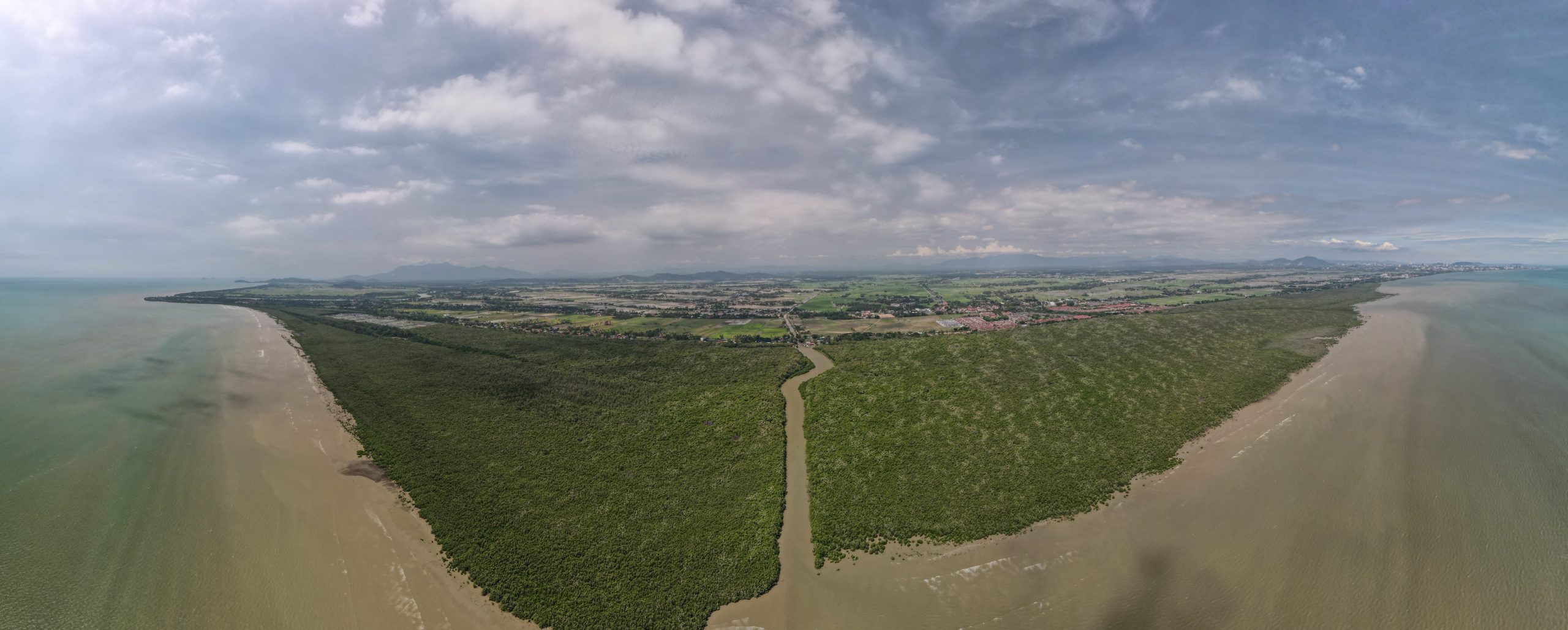
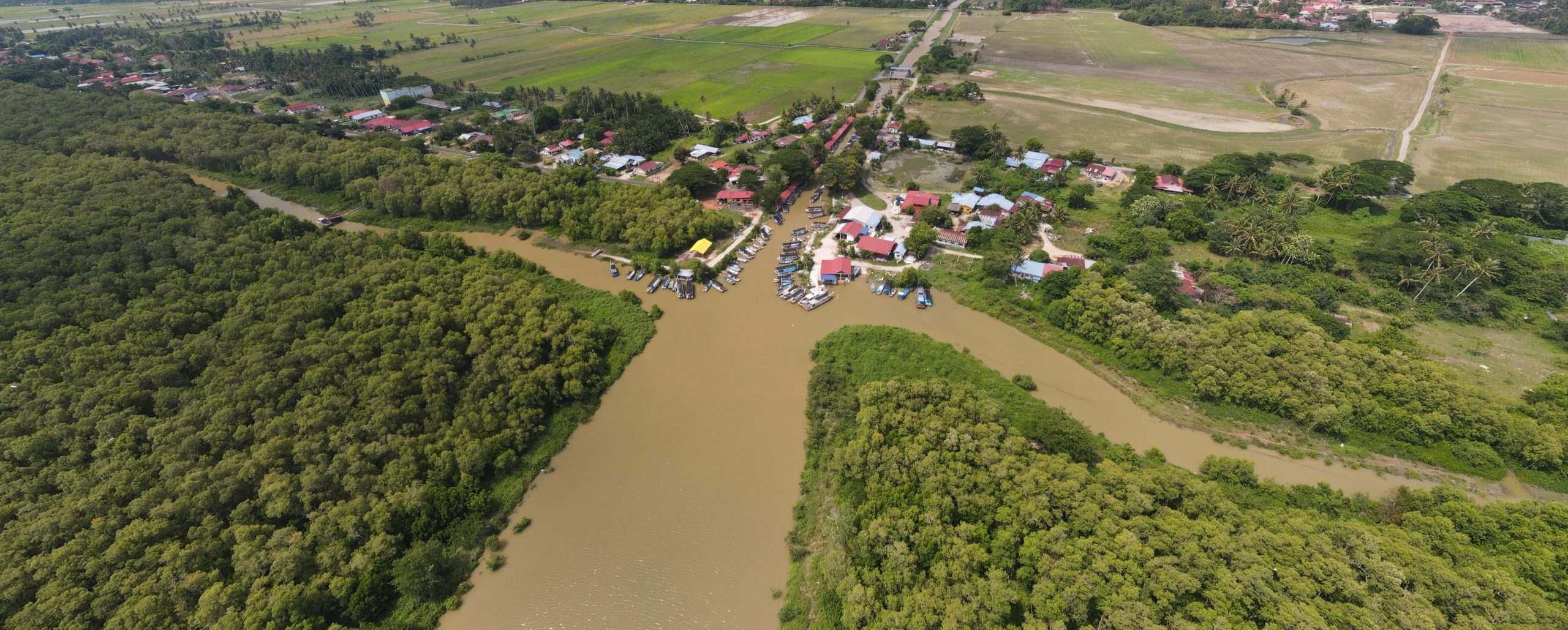
Teluk Air Tawar-Kuala Muda (TAT-KM) is located in Penaga, Seberang Perai utara, Penang. This ecosystem consists of mangrove forests, tidal mud flats, and diverse species of fauna and flora. This mangrove forest is the largest and the only remaining that has not yet been affected by development in Penang. Avicennia marina trees dominate the forest zonation on the sea coast, followed by Sonneratia alba and Sonneratia ovata. In landward zones there are Rhizophora apiculata, Brugueira cyclindrica, Brugueira parviflora, while exposed areas are overgrown with Acanthus sp. and Acrostichum sp.
In addition to migratory bird species, this ecosystem is rich in resident bird species, mammals such as otters and dusky leaf langur, reptiles such as snakes and skinks, and various species of molluscs and gastropods.
The areal coverage of the forest is at least 620 ha while mudflats cover approximately 450 ha. When the tide level is at its lowest, vast mudflats are clearly visible that extend from the Sg. Muda estuary in the north to Sg. Abdul estuary in Teluk Air Tawar in the south. The length of the mangrove forest is estimated to be 10 km. The widest part, located between Sg. Tembus and Sg. Lahar Endin, is estimated to be 2 km.
TAT-KM wetlands perform various functions important to the entire ecosystem – as a habitat, nursery, water filtration, coastal protection from erosion and strong waves. One of its main functions is as a stopover site for migratory birds on their migration to the northern and southern hemispheres during the annual migratory season. Species recorded here include IUCN Endangered and Near-Endangered species such as Nordmann’s Greenshank, Great Knot, Asian Dowitcher, Eurasian Curlew and Fareastern Curlew.
TAT-KM wetlands has been listed as a Key Biodiversity Area, and an Important Bird and Biodiversity Area (IBA – MY003). Many bird watchers from many countries have visited Sg. Tembus to enjoy the spectacular view of thousands of migratory shorebirds of various species gathering across the mudflats during the peak of the migration season.
The main threats to this wetland ecosystem are land conversion to aquaculture ponds and other land uses, coastal development and sea reclamation. Although part of the mangrove forest here has been gazetted as a forest reserve, protection throughout the wetland ecosystem is needed to be implemented to preserve the integrity, effective ecosystem services, and natural treasures here.
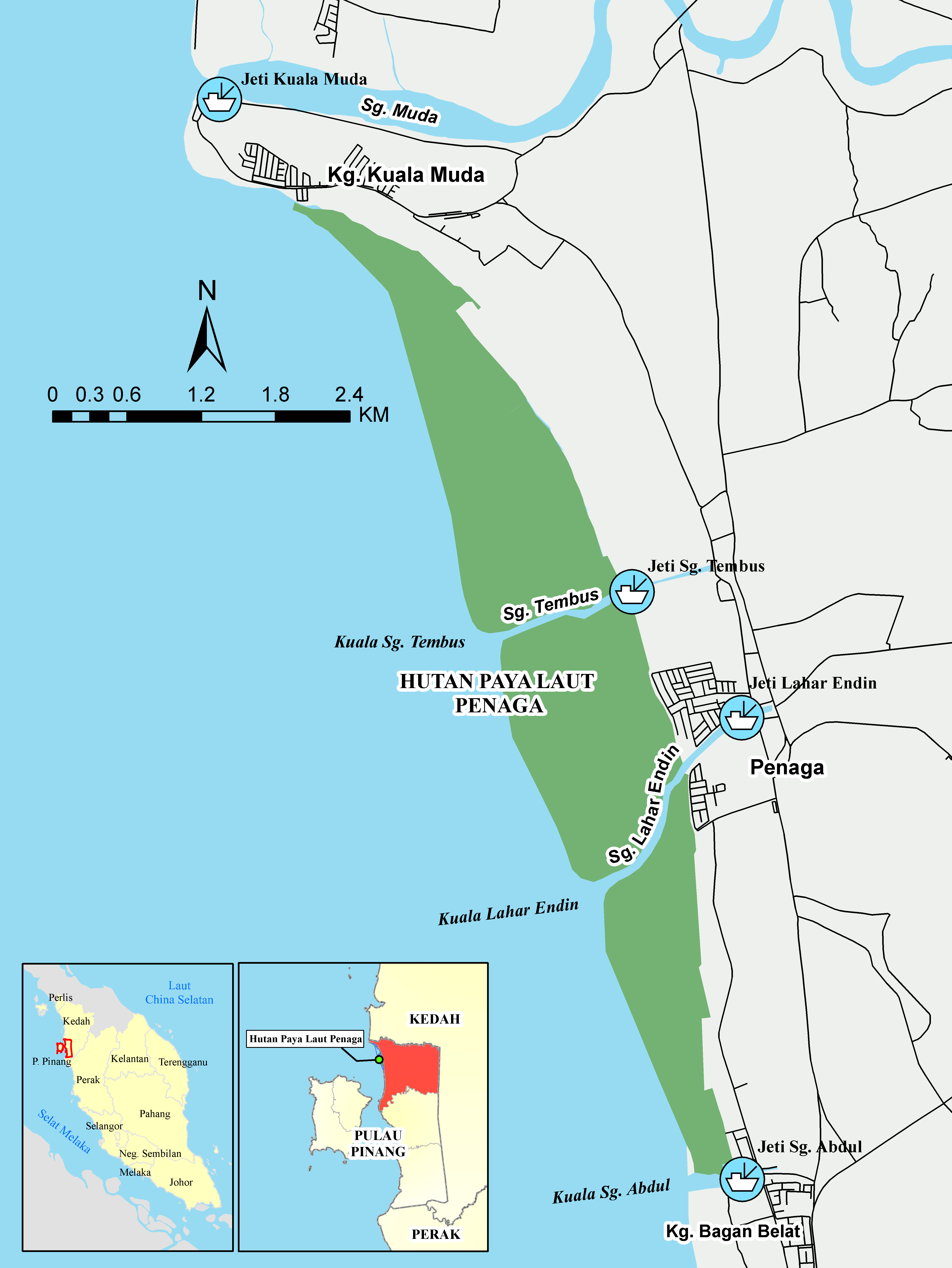
Location of TAT-KM wetlands in Seberang Perai Utara, Pulau Pinang
Conservation
Teluk Air Tawar- Kuala Muda is situated in Northern part of Seberang Perai, Penang. This wetland area comprises a large area comprising various ecosystems such as mudflats areas, estuary, coastline areas and mangrove forest. These ecosystems provide crucial habitat for diverse flora and fauna. They also act as important water catchment areas and provides ampnutrients for local citizens of TAT-KM.
The mangrove forest here in TAT-KM is the only mangrove forest in Penang that is left undisturbed. The vegetation comprises various species such as Avicennia and Sonneratia trees. In a more open zonation, there are Rhizophora and Bruigera trees, as well as Piai and Nypa trees growing among Jeruju and Piai trees.
The mangrove area extends until 620 ha, while the mangrove forest covers about 450 ha. When it is low tide, the mudflats edge and coastline would be obviously seen from the Dataran Tsunami, and from the estuary of SUngai Muda in the northern area, until the Sg Abdul’s estuary in Bagan Belat. Two river channeled its water flow towards Sg Tembus and Sg Lahar Endin..
TAT-KM has been recognized as Main Biodiversity Area (or in Malay- Kawasan Biodiversiti Utama- KBA), and Important Bird and Biodiversity Area (IBA-MY003) A lot of birders would visit TAT-KM areas especially in Sg Tembus during the migratory bird season, where thousand of waders would flock and roost at the areas during the peak season (Dec- Jan)
There are nine pathways of migratory birds around the globe. The East Asian Austalian provides a pathway for migratory birds across Southeast Asian countries, to the extent of Australia and New Zealand in the south. Due to its importance, some countries including Malaysia collaborate to protect the area, through the East Asian Australian Flyway Partnership. This partnership is required to protect the migratory shorebirds that are dependent on the area for the food and resources during the season.
Events
Visiting The Site
Directions
TAT-KM located in the Penaga area, Seberang Perai north, is very close to the Penang-Kedah border. This area can be visited by car from any location In Peninsular Malaysia easily due to the good road network that connects it. From Georgetown on the island, the journey takes approximately 1 hour by car via the Penang bridge and through the Butterworth Outer Ring Road (BORR) straight to Penaga. If coming from Kuala Lumpur by car, the journey there takes approximately 4-5 hours. If coming from the east coast, for example Kota Bharu, the travel time is approximately 5-6 hours. Although there are a number of jetties to access TAT-KM, the most suitable to shorebirds watching and the wetlands is via Sg. Tembus’s fishermen jetty. This location is easy to find through Waze and Google maps applications using the name,
Pasar nelayan Sg. Tembus, which will take you directly to the jetty.
Packages
As part of a sustainable development and conservation effort at TAT-KM wetlands, SPMP is working closely with local fisher folks of Sg. Tembus to develop and run a community-based ecotourism (CBET) initiative. We offer boat trips and guided packages for the general public and serious shorebird watching activities. We welcomed everyone to come and enjoy the fascinating world of shorebirds at TATKM wetlands and support the local CBET at the same time.
SPMP assists the fisher folks in taking boat bookings and arranging trips, kindly let us know if you need their service.
Sightings
There are over 240 species of shorebirds worldwide, 70 have been sighted in Malaysia and 48 at TAT-KM. Some of these are rare vagrants, while others are annual migrants in flocks of thousands.


Flagged bird sightings at TAT-KM


Rare sightings at TAT-KM

