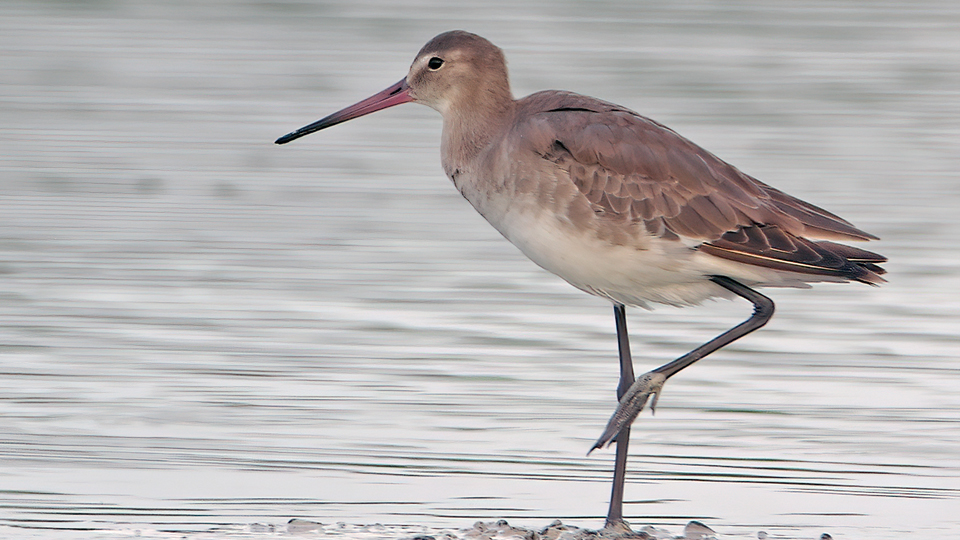
Asian Dowitcher
© Credits: Dave Bakewell
SCIENTIFIC NAME
Limnodromus semipalmatus
MALAY NAME
Kedidi-Tetiruk Asia
CONSERVATION STATUS
NT
Status
Migrant and non-breeding visitor, usually in small numbers (<50), although in recent years, several hundred to a thousand have been recorded wintering in Pulau Pinang.
Identification
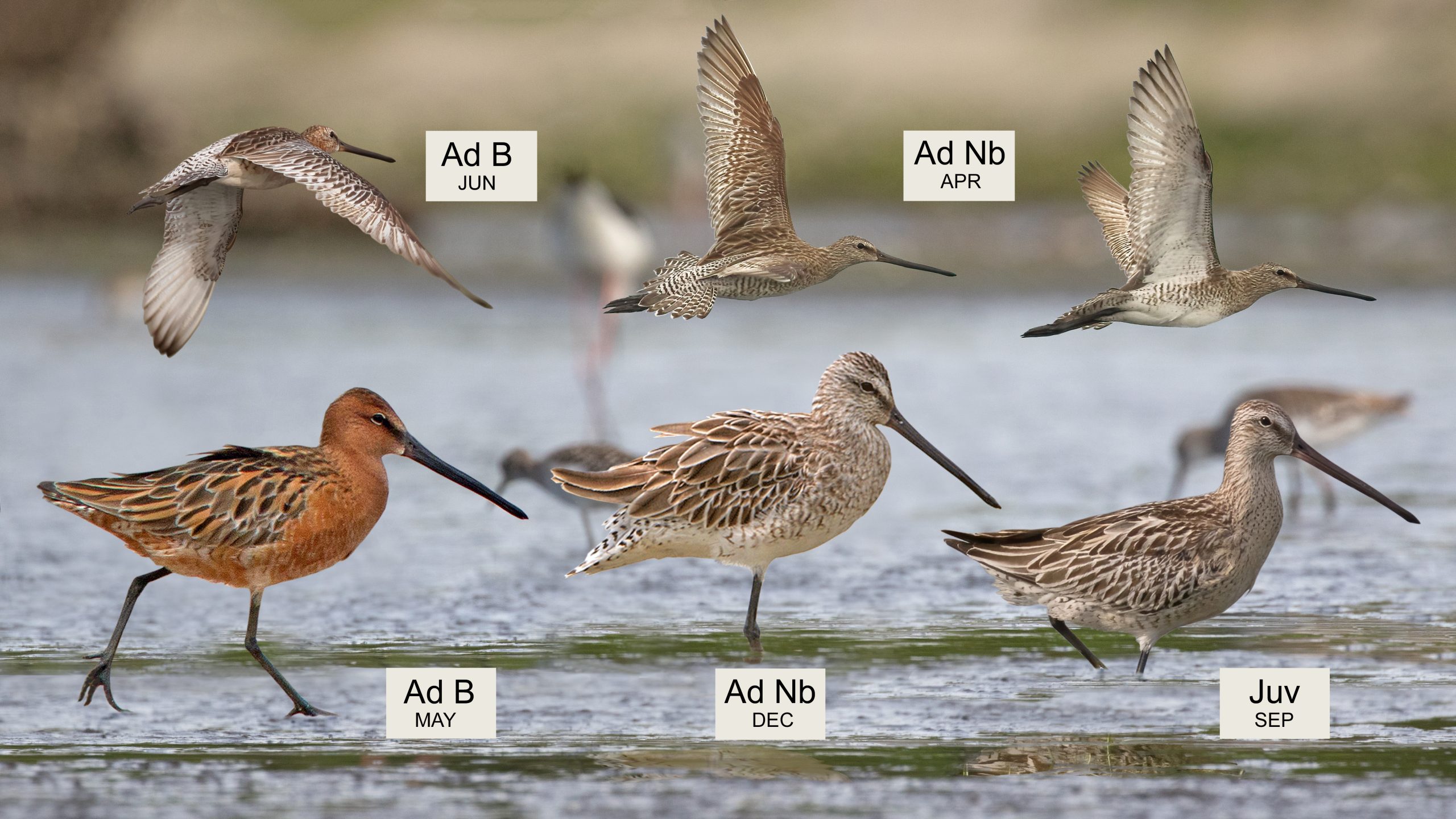
Similar in size to melanuroides Black-tailed Godwit, with black legs intermediate in length between Bar-tailed and Black-tailed Godwits. Bill largely black, straight and slightly blob-tipped. In flight, upper forewing and outer primaries dark grey, inner primaries, secondaries and greater coverts paler, at times giving the impression of a silvery wing panel. Tail, rump and back barred grey. Toe projection beyond tail more than Bar-tailed Godwit, less than Black-tailed Godwit. From below, wing linings are mostly white, with darker carpal patch and primary tips. Ad B: (Feb – Aug) Blackish lores and evenly dark brown crown; white eyering. Rest of head and underparts rich chestnut rufous, with brownish bars on flanks and vent. Scapulars, tertials and wing coverts are dark brown in the centre, with variable orange- rufous edges or grey-brown edges. Ad Nb: (Sep – Feb) Dark lores and crown contrast with whitish supercilium, which is more prominent in front of the eye. Rest of head, throat and breast streaked grey-brown; belly whitish with barring on flanks and vent. Upperpart feathers grey-brown with darker centres and paler edges. Juv: (Aug – Oct) Buff wash to breast; upperpart feathers have blackish centres and pale buff edges, making the bird look neater and more contrasting than adults.
Similar Species
Distinguished from both godwits by straight, all dark bill of even thickness. On sleeping birds, even dark crown and whitish supercilium are useful pointers. Bar-tailed Godwit is most similar in plumage but is much larger. Black-tailed Godwit is similar in size but is longer-legged and in Nb plumage is largely unstreaked. In flight, note very different wing patterns.
Typical behaviour
Prefers to forage near the tideline, often in belly-deep water; feeds by rhythmic deep probing (‘sewing machine action’). Frequently mixes with Black-tailed Godwit flocks.
Vocalizations
Typical call on migration a single downslurred note, reminiscent of a cat’s ‘meow’. https://xeno-canto.org/685133. https://youtu.be/kmmoGj_B__A?si=8QUesAh8wT5v1FGg
Range
Occurs sporadically and usually in small numbers along the west coast of Peninsular Malaysia, the east coast of Johor and the north Borneo coastline. In recent years, counts have increased substantially on the Melaka Strait coastline, and this may be a reflection of habitat destruction or disturbance in north Sumatra, which has been the traditional wintering location. Occasional records in coastal freshwater habitats.
Seasonality
Most frequently seen August – February.